

A turnkey fit-out is a coordinated project-delivery approach where one contractor manages the agreed workstreams through to handover. For Revolex, turnkey delivery typically starts with client-provided design, drawings or a defined scope. Revolex can then coordinate mobilisation, procurement, programme management, multi-trade works, testing, snagging and handover within the agreed project requirements.
Turnkey does not automatically mean that the contractor provides full architectural or concept design. The exact responsibilities should always be defined for the individual project.
Quick Insight Summary
For commercial clients, the main difference with turnkey delivery is the way responsibility and coordination are structured.
Rather than the client managing several trade contractors separately, a turnkey approach can provide one coordinated delivery route and a single point of contact across the agreed scope. For Revolex, that route typically begins once the client has provided suitable design information, drawings or a defined project scope.
Turnkey can be useful where several workstreams need coordinated procurement, sequencing and site delivery. It is not automatically cheaper, faster or more suitable for every project, and the exact responsibilities should be confirmed before appointment.
Turnkey Fit-Out at a Glance
| Question | Practical answer |
| What is turnkey fit-out? | A coordinated delivery model where one contractor manages the agreed workstreams through to handover |
| Where does Revolex typically start? | From client-provided design, drawings or a defined scope |
| Who is the main delivery contact? | Revolex provides a single point of contact for its agreed delivery scope |
| What can be coordinated? | Relevant multi-trade works, depending on the project |
| Can procurement be included? | Yes, procurement can form part of the agreed turnkey delivery scope |
| How is the programme managed? | Agreed workstreams are coordinated within the project programme |
| What happens at completion? | Testing, snagging, commissioning coordination where relevant and handover |
| Does turnkey always include design? | No. Revolex’s approved model starts with client-provided design or defined scope |
| Is turnkey always the best route? | No. Suitability depends on the project and how the client wants responsibilities structured |
What Does Turnkey Fit-Out Mean?
In commercial fit-out, turnkey describes a coordinated way of delivering a project rather than a specific list of construction works.
The practical idea is that one contractor takes responsibility for coordinating the agreed delivery workstreams instead of the client appointing and managing each contractor separately.
That may involve coordinating:
- Building and interior works.
- Electrical works.
- Mechanical / HVAC works.
- Procurement.
- Site mobilisation.
- Trade sequencing.
- Programme management.
- Testing and snagging.
- Handover.
Mechanical / HVAC refers to heating, ventilation and air-conditioning systems and related building services.
The exact scope varies from project to project. “Turnkey” should therefore not be treated as meaning that every contractor provides the same services or assumes every possible project responsibility.
If you are still establishing the broader difference between fit-out and refurbishment, see Commercial Fit-Out vs Refurbishment: What’s the Difference?.
What Does Turnkey Mean for Revolex?
For Revolex, turnkey fit-out and refurbishment delivery typically runs from client-provided design through to handover.
That distinction matters.
It means the starting point is normally design information, drawings or a defined project scope supplied by the client or their project team.
From there, Revolex can coordinate practical project delivery within the agreed scope. Depending on the project, this may include:
- Review of project information.
- Site survey where required.
- Design coordination where relevant.
- Value engineering where useful and appropriate.
- Costing and quotation.
- Mobilisation.
- Procurement.
- Programme planning.
- Multi-trade site delivery.
- Testing.
- Snagging.
- Commissioning coordination where relevant.
- Handover.
This does not mean Revolex automatically provides complete architectural or workplace design from initial concept.
For the detailed service proposition, see Turnkey Fit-Out & Refurbishment Services.
Where Does Revolex’s Turnkey Responsibility Start?
The starting point depends on the project, but Revolex’s approved turnkey model normally requires the client to provide suitable information about what needs to be delivered.
That may include:
- Design information.
- Drawings.
- Defined scope.
- Required project outcome.
- Programme expectations.
- Existing site information.
- Access constraints.
- Known building requirements.
Revolex can then review that information and coordinate the agreed delivery scope.
The precise responsibilities should be established before appointment. A turnkey delivery structure does not mean that every client, consultant, landlord or project-team responsibility automatically transfers to the contractor.
How Does a Turnkey Fit-Out Project Typically Progress?
A typical Revolex delivery process may include the following stages.
1. Client-provided design or defined scope
The project starts with the client’s available design information, drawings or defined requirements.
2. Project information review
Revolex reviews the available scope, drawings, programme requirements and known site constraints.
3. Site survey where required
A site review may be needed to confirm existing conditions, access, logistics or technical requirements.
4. Design coordination where relevant
Where project information requires coordination between different workstreams, this can be reviewed before delivery.
This should not be confused with full architectural design responsibility.
5. Value engineering where useful and appropriate
Value engineering means reviewing the scope, specification or delivery approach to identify a commercially suitable option while maintaining the required project outcome where possible.
It should not be treated as a guarantee of savings.
6. Costing and quotation
The agreed information is used to develop the commercial proposal.
7. Mobilisation
Mobilisation prepares the project for physical site delivery.
8. Procurement and programme planning
Materials, specialist requirements and agreed workstreams are coordinated against the programme.
9. Site delivery
Physical works begin in line with the agreed scope and programme.
10. Multi-trade coordination
Relevant trades are sequenced and coordinated across the project.
11. Testing, snagging and commissioning coordination
Completion activities are coordinated where relevant to the agreed works.
12. Handover
The project moves through final completion and handover.
The exact sequence varies depending on project scope, information, procurement, access and site conditions.
What Can Turnkey Fit-Out Delivery Include?
A turnkey project can involve several commercial workstreams under one coordinated delivery structure.
Depending on the agreed scope, these may include:
- Partitions.
- Ceilings.
- Flooring.
- Decorations.
- Joinery.
- Kitchens or welfare areas.
- Lighting.
- Electrical works.
- Mechanical / HVAC works.
- Other building and interior works.
For example, a layout change may affect partitions, lighting, power and Mechanical / HVAC requirements at the same time. Under a coordinated delivery structure, those workstreams can be planned together rather than treated as isolated activities.
For more detail on relevant workstreams, see:
Not every turnkey project will include every trade.
Why Do Commercial Clients Consider a Turnkey Approach?
Businesses may consider turnkey delivery when they want a more coordinated route for managing several project workstreams.
Potential reasons include:
- One main delivery contact.
- Coordinated procurement.
- Coordinated programme management.
- Multi-trade sequencing.
- Reduced fragmentation between separate contractors.
- A clearer route for day-to-day project communication.
These are coordination benefits rather than guarantees of a particular cost, programme or project outcome.
Whether the approach is suitable depends on the project and how the client wants responsibilities to be structured.
What Does a Single Point of Contact Mean in Practice?
A single point of contact means the client has one main Revolex contact coordinating communication around the agreed delivery scope.
Instead of separately contacting several trade contractors about day-to-day site issues, programme updates or delivery questions, the client has one principal communication route for the Revolex-managed works.
This can support:
- Clearer project communication.
- Coordinated progress updates.
- Faster routing of site questions.
- Easier escalation where an issue affects several workstreams.
It does not mean that the client has no decisions to make or that other parties such as designers, consultants, landlords or building managers are no longer involved.
How Does Multi-Trade Coordination Work?
Commercial fit-out and refurbishment workstreams often depend on each other.
For example:
- New partitions may affect electrical positions.
- Ceiling works may need coordination with lighting.
- Layout changes may affect ventilation or cooling.
- Joinery may depend on completed flooring, electrical or decorating works.
- Testing activities may need to follow completion of several different trades.
Multi-trade coordination involves sequencing those dependencies within the agreed programme.

Revolex’s role is to coordinate the relevant workstreams within its agreed project scope.
That does not necessarily mean Revolex directly self-performs every trade involved.
What Happens During Procurement and Mobilisation?
Procurement is the process of arranging the materials, specialist inputs and agreed project resources needed for delivery.
Mobilisation is the preparation required before physical site works begin.
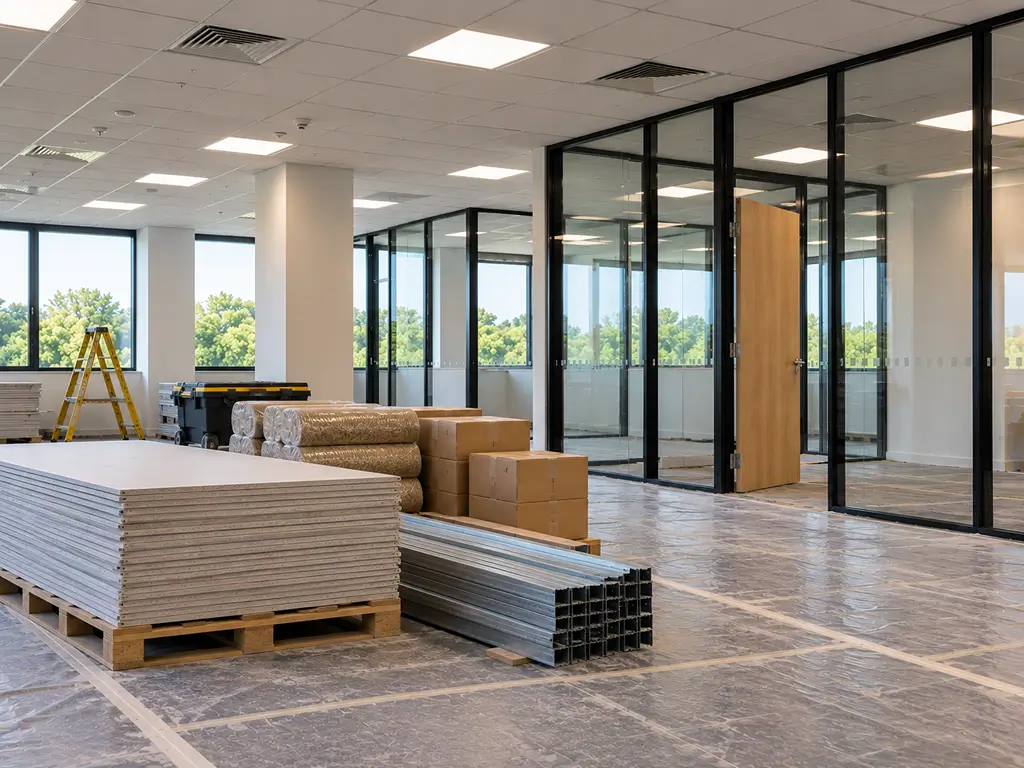
Depending on the project, this stage may consider:
- Final project information.
- Agreed scope.
- Procurement requirements.
- Site access.
- Delivery arrangements.
- Programme.
- Building restrictions.
- Site set-up.
- Occupancy requirements.
- Trade sequencing.
These practical requirements are important because even a well-defined interior scope may be affected by restricted access, delivery windows, shared areas or operational requirements.
How Is the Programme Coordinated?
Turnkey delivery can provide one programme-management structure across the workstreams included in the agreed scope.
The programme may need to coordinate:
- Procurement.
- Site access.
- Trade dependencies.
- Existing conditions.
- Building restrictions.
- Occupied areas.
- Testing.
- Snagging.
- Completion activities.
This does not mean turnkey delivery automatically produces a shorter programme.
Actual timescales remain project-specific and depend on the scope, available information, procurement, access and other constraints.
Revolex’s approved positioning is a quality and on-time focus, not a guaranteed completion date.
What Happens at Testing, Snagging and Handover?
Completion involves more than reaching the end of physical installation works.
Depending on the agreed scope, the final stages may include:
- Testing.
- Commissioning coordination.
- Snagging.
- Completion of outstanding items.
- Final project review.
- Handover.
Snagging is the process of identifying items that require completion, correction or adjustment before project close-out.

Commissioning coordination involves coordinating relevant checks or completion activities for installed building services where required.
The exact handover requirements depend on the project.
Turnkey Fit-Out vs Managing Separate Contractors
There is no single delivery model that suits every commercial project.
The practical difference is mainly about how contractor responsibilities and coordination are structured.
| Consideration | Turnkey delivery | Separate contractor appointments |
| Main coordination route | One contractor coordinates the agreed workstreams | Client or consultant may coordinate multiple appointments |
| Communication | One main delivery contact | Several contractor contacts may be involved |
| Trade coordination | Managed across the agreed turnkey scope | Coordination may sit between separate contractors |
| Procurement | Can be coordinated within the agreed scope | May be divided between contractors or packages |
| Programme | One programme structure across agreed workstreams | Separate packages need to be aligned |
| Client management input | Can reduce fragmented day-to-day coordination | May require greater direct coordination |
| Contractor appointments | More workstreams sit under one delivery structure | Individual work packages can be appointed separately |
| Responsibility | Defined around the agreed turnkey scope | Divided across individual appointments |
The appropriate route depends on the project, the client’s internal resources, consultant structure and preferred allocation of responsibility.
Separate contractor appointments can be perfectly appropriate where a client already has the project-management resources to coordinate several packages or deliberately wants direct control over specialist appointments.
When Might Turnkey Fit-Out Be Suitable?
Turnkey delivery may be worth considering where:
- Several trades need to be coordinated.
- The client wants one main delivery contact.
- Design information or scope is sufficiently developed.
- Programme coordination across multiple workstreams is important.
- The client wants procurement and site delivery coordinated through one delivery team.
- Managing several individual trade contractors directly would create unnecessary fragmentation.
It may also be useful where a commercial fit-out or Commercial Refurbishment includes several linked interior and building-services workstreams.
Suitability should still be assessed against the individual project.
When Might Turnkey Not Be the Right Delivery Route?
Turnkey is not automatically appropriate for every project.
Another structure may be more suitable where:
- The design is still at a very early stage.
- The client intends to appoint and manage specialist contractors separately.
- A consultant team is already coordinating individual trade packages.
- Procurement requires separate contractor appointments.
- The requirement is limited to one narrow standalone work package.
- Project responsibilities need to be divided in a different way.
The aim should be to choose a delivery structure that fits the project rather than applying “turnkey” as a default label.
How Does Turnkey Delivery Work in an Occupied Environment?
Turnkey delivery can also be used for suitable projects in occupied and live commercial environments.
Where people remain in the building, coordinated delivery may need to consider:
- Access.
- Noise.
- Dust.
- Deliveries.
- Working-area separation.
- Building restrictions.
- Programme constraints.
- Stakeholder communication.
The exact controls depend on the site and works.
For more detail, see How Are Commercial Fit-Out Works Managed in Occupied Buildings?.
Common Misunderstandings About Turnkey Fit-Out
“Turnkey always includes full design”
Not for Revolex’s approved delivery model.
Revolex turnkey delivery typically starts with client-provided design, drawings or defined scope and continues through coordinated delivery to handover.
“Turnkey guarantees one fixed project cost”
Turnkey describes the delivery structure. Commercial terms still depend on the agreed scope, information available and project requirements.
It should not be treated as a universal guarantee of single-price certainty.
“Turnkey is always cheaper”
There is no universal cost advantage.
The commercial outcome depends on the scope, procurement requirements, existing conditions, programme and other project-specific factors.
“Turnkey is always faster”
A coordinated programme can help manage dependencies, but actual timescales remain project-specific.
Turnkey should not be presented as a guarantee of faster completion.
“The client has nothing left to manage”
The client may still need to provide decisions, approvals, design information, access information and other project inputs.
A single point of contact simplifies the communication structure around the agreed delivery scope. It does not remove all client responsibility.
“Every trade is always included”
No.
The trades included in a turnkey project depend on the agreed scope.
What Should You Clarify Before Choosing Turnkey Delivery?
Before selecting a turnkey approach, confirm the responsibility structure clearly.
Useful questions include:
- Is the design or scope sufficiently developed?
- What information will the client provide?
- Which workstreams are included?
- Which items sit outside the turnkey scope?
- Which responsibilities remain with the client?
- How will specialist trades be coordinated?
- Who manages procurement?
- How will the programme be managed?
- What access or building constraints apply?
- What happens during testing and snagging?
- What does handover include?
These questions help turn the word “turnkey” into a defined project scope rather than an assumption.
What to Send When Discussing a Turnkey Fit-Out
Where available, provide:
- Client-provided design.
- Drawings.
- Defined scope.
- Required project outcome.
- Programme or target dates.
- Site address.
- Existing-site information.
- Access requirements.
- Building constraints.
- Occupancy requirements.
- Known Mechanical / HVAC requirements.
- Known electrical requirements.
- Relevant surveys.
- Site photographs.
Not every project will have all of this information ready at the first enquiry.
Providing what is available, together with a clear explanation of the project requirement, can help identify what still needs to be clarified.
For more detailed guidance, see What to Send When Requesting a Commercial Fit-Out Quote.
How Revolex Approaches Turnkey Fit-Out and Refurbishment Delivery
Revolex’s turnkey approach starts from client-provided design, drawings or defined scope and focuses on practical, coordinated project delivery through to handover.
Depending on the agreed project requirements, the process may involve:
- Enquiry and project assessment.
- Review of drawings, scope and available information.
- Site survey where required.
- Design coordination where relevant.
- Value engineering where useful and appropriate.
- Costing and quotation.
- Mobilisation.
- Procurement and programme planning.
- Site delivery.
- Multi-trade coordination.
- Testing, snagging and commissioning coordination.
- Handover.
Revolex provides a single point of contact across its agreed scope, with a practical approach to communication, coordinated delivery and a quality and on-time focus.
The exact service scope and responsibilities depend on the individual project.
See Turnkey Fit-Out & Refurbishment Services for the detailed Revolex service proposition.
Frequently Asked Questions
What Does Turnkey Fit-Out Mean?
Turnkey fit-out describes a coordinated delivery model where one contractor manages the agreed project workstreams through to handover.
The precise scope depends on the contractor and the project, so the responsibilities should be clearly defined before appointment.
Does Turnkey Fit-Out Include Design?
Not automatically.
For Revolex, turnkey delivery typically starts with client-provided design, drawings or a defined scope. Revolex then coordinates the agreed delivery work through to handover.
This should not be interpreted as automatic full architectural or concept-design responsibility.
What Does Revolex Need From the Client Before Turnkey Delivery Starts?
Useful information can include drawings, design information, defined scope, programme requirements, site details, access constraints and a clear description of the required project outcome.
The exact information needed depends on the project.
What Does a Turnkey Fit-Out Contractor Coordinate?
Depending on the agreed scope, coordination can include mobilisation, procurement, programme management, multi-trade site delivery, testing, snagging, commissioning coordination and handover.
Not every project will include every workstream.
What Is the Difference Between Turnkey Delivery and Managing Separate Contractors?
Turnkey delivery places agreed workstreams under one coordinated delivery structure.
With separate appointments, the client or consultant may need to coordinate individual contractors and ensure their programmes and responsibilities align.
Neither approach is automatically right for every project.
Is Turnkey Fit-Out Always Cheaper or Faster?
No.
Turnkey can provide a more coordinated delivery structure, but cost and programme depend on the scope, project information, procurement, existing conditions, access and other project-specific factors.
When Is Turnkey Fit-Out a Suitable Approach?
It may suit projects where several trades need coordination, the client wants one main delivery contact and suitable design or scope information is already available.
The decision should still reflect the project’s complexity and preferred allocation of responsibility.
When Might Turnkey Not Be the Right Delivery Route?
It may not be the most suitable route where the client wants to manage separate specialist contractors, where the design remains too early or undefined, or where the project requires a different procurement structure.
About This Guide
This guide explains turnkey delivery in the context of Revolex’s commercial fit-out and refurbishment service model.
For Revolex, turnkey delivery typically starts with client-provided design, drawings or defined scope and continues through coordinated project delivery to handover.
Exact inclusions and responsibilities depend on the agreed project scope. Comparisons with separately appointed contractors are general commercial guidance rather than contractual or legal advice.
Explore Turnkey Fit-Out & Refurbishment Services
If your design, drawings or project scope are sufficiently developed, Revolex can review the available information and discuss whether a coordinated turnkey delivery route is appropriate.
Learn more about Turnkey Fit-Out & Refurbishment Services or contact Revolex to discuss a suitable commercial project.